
Discover typical specialist cleaning Dublin prices, what affects your quote, and how to choose the right exterior cleaning service.
For most residential and small commercial jobs, specialist cleaning in Dublin may cost from approximately €150 for a small call-out to €1,000 or more for a larger, heavily contaminated area. A straightforward hard-surface wash is usually priced by square metre, while oil, chewing gum, graffiti, and deeply embedded staining are more likely to require a minimum call-out charge, specialist products, hot water, steam, or several treatment stages.
As a practical guide, standard exterior washing in Ireland is often advertised at roughly €2.50–€5 per square metre. Specialist treatments can move into the region of €4–€8 per square metre for oil removal, with more complex restoration work quoted after an inspection. These figures are indicative market benchmarks, not a fixed price list. The final cost of specialist cleaning Dublin customers receive depends on the surface, contamination, access, area, and method required.
For an accurate price, a reputable contractor should ask for the property location, approximate measurements, surface type, photographs, and details of the staining. Where the surface is delicate or the contamination is severe, an on-site assessment is the safest way to prepare a clear quotation.
Indicative specialist cleaning prices in Dublin
A small specialist cleaning call-out typically costs €150–€250. This price can vary depending on travel distance, setup time, minimum labour charges, and equipment mobilisation.
Standard cleaning for concrete, tarmac, or paved areas generally costs €2.50–€5 per square metre. The final price depends on the size of the area, level of dirt, accessibility, joint sanding requirements, and water availability.
Oil or diesel stain treatment usually costs around €4–€8 per square metre. Factors affecting the price include the age and depth of the stain, the type of degreaser required, hot-water treatment, and whether repeat applications are necessary.
Chewing gum removal starts at approximately €100 for a small area. The cost may increase depending on the number of gum deposits, pedestrian access, steam equipment requirements, and whether the work must be completed outside normal hours.
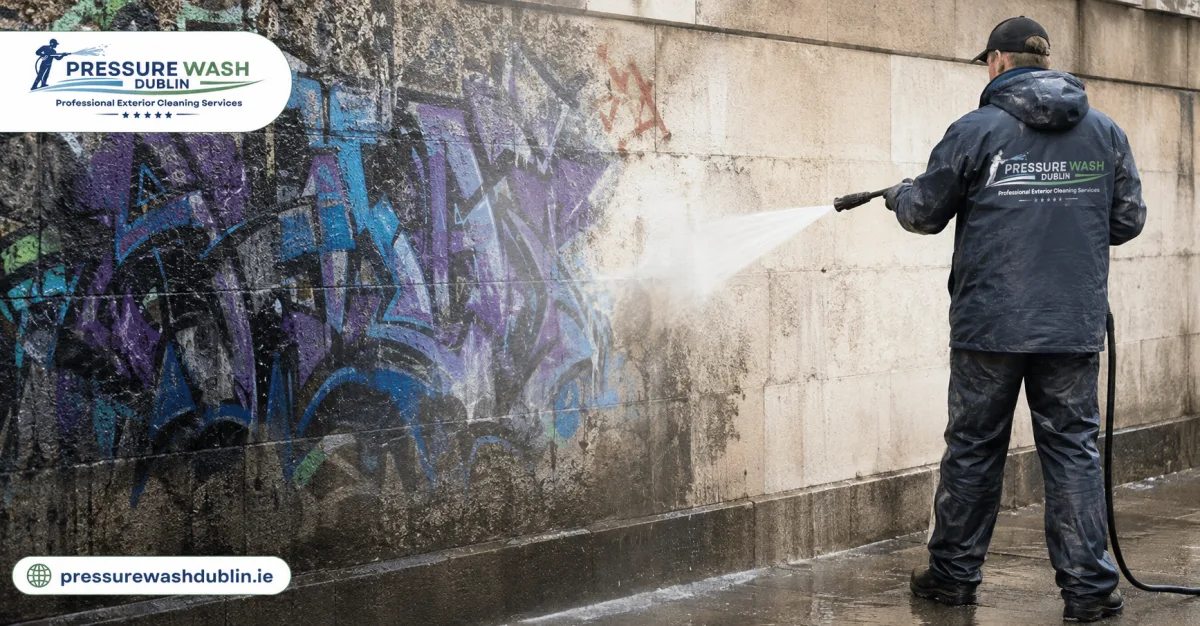
Graffiti or paint removal often costs €15–€40 per square metre. The price depends on the type of paint, surface porosity, working height, protective coating requirements, and disposal procedures.
Soft washing for sensitive exterior surfaces usually costs around €3–€6 per square metre. Factors include whether the surface is render, stone, or roofing, the level of algae or moss, the biocide treatment needed, and access equipment requirements.
Sealing or protective treatment generally costs approximately €4–€10 per square metre. The price depends on the product selected, the amount of surface preparation required, the number of coats, and drying conditions.
Some contractors quote by the hour, particularly for small or irregular jobs. Irish pricing guidance commonly places professional exterior cleaning labour at approximately €40–€60 per hour, although specialist equipment and treatment chemicals may be charged separately. Commercial projects may receive a lower unit rate when the area is large, but they can also involve additional requirements such as traffic management, out-of-hours access, water recovery, or documentation.
What does specialist exterior cleaning include?
Exterior specialist cleaning in Dublin is intended for problems that a normal cold-water pressure wash cannot safely or completely resolve. Typical work includes oil and diesel stain removal from driveways, forecourts, car parks, loading bays, and workshop entrances. It can also include chewing gum removal from paths, shopfronts, public areas, and high-traffic entrances.
Other specialist cleaning services may address graffiti, grease, ingrained food deposits, heavy traffic film, algae, moss, and staining on natural stone. The correct process depends on the substrate. Concrete, tarmac, block paving, sandstone, brick, render, roof tiles, and painted surfaces should not all be treated with the same pressure or chemical.
A professional workflow normally starts with stain analysis and a discreet spot test. The technician can then select an appropriate combination of low-pressure washing, hot water, steam, biodegradable cleaning agents, or a poultice treatment. A protective sealer may be recommended after cleaning where it is suitable for the surface.
The goal is not simply to use the strongest possible pressure. The goal is to remove contamination while protecting the underlying material.
Six factors that affect the price of specialist cleaning in Dublin
1. The size of the affected area
A larger area generally reduces the price per square metre because setup, travel, and equipment mobilisation are spread across more work. A small stain can still have a relatively high total cost if it requires a dedicated visit and specialist equipment.
2. The type and age of contamination
Fresh surface dirt is usually easier to remove than oil that has soaked into porous concrete for months or years. Chewing gum may require individual steam treatment. Graffiti may need a surface-specific remover and follow-up protection. The longer contamination remains, the more likely additional treatment stages become.
3. The surface material
Hard concrete can tolerate a different method from asphalt, sandstone, brick, render, or a heritage surface. Porous and delicate materials need controlled pressure and carefully selected chemicals. This can increase labour time, but it reduces the risk of etching, colour change, joint damage, or water penetration.
4. Access and site conditions
Narrow side passages, upper-level areas, limited parking, stairs, restricted water access, and nearby planting can all affect the quotation. Commercial sites may also need work outside opening hours to avoid disrupting customers, residents, or deliveries.
5. Required equipment and treatment stages
A basic wash may need only a pressure washer and surface cleaner. Specialist work may require steam equipment, hot-water pressure washing, degreasers, extraction, stain-absorbing poultices, protective sealers, or access equipment. Each additional stage affects both time and cost.
6. Wastewater and safety requirements
Oil, chemical residue, and contaminated wash water may need to be managed carefully. A commercial contractor may include containment, recovery, disposal, risk assessments, method statements, and site coordination in the price. These services are valuable even when they are not visible in the finished result.
Specialist cleaning for homes and commercial premises
For a homeowner, specialist cleaning may involve one oil-stained driveway, a patio with ingrained marks, or a small section of wall affected by graffiti. The total price is often governed by the minimum call-out and the time required to prepare and treat the stain.
For a business, the scope may include a forecourt, car park, loading bay, shopping-centre entrance, communal footpath, or public-facing frontage. A commercial quote should explain the cleaning area, proposed method, access arrangements, expected working hours, surface protection, and any follow-up treatment. It may also include a maintenance schedule to prevent contamination from becoming a larger and more expensive problem.
If you are comparing specialist cleaning companies, do not select a provider on price alone. Ask whether the quotation includes preparation, stain treatment, rinsing, clean-up, joint re-sanding, sealing, and VAT. Two apparently similar prices may cover very different scopes of work.
How to get a fair and accurate quote
Start by sending clear photographs taken in daylight. Include a wide image showing the whole area and close-ups showing the contamination. State the approximate length and width, the surface material, how long the problem has been present, and whether the area is accessible to a van and water supply.
Ask the contractor to confirm whether the price is fixed, per square metre, hourly, or subject to inspection. You should also ask what result is realistically achievable. Some stains can be removed completely, while older oil deposits may be reduced rather than eliminated because they have penetrated deeply into the substrate.
A good quote should be specific about the proposed method. It should explain whether the team will use pressure washing, soft washing, steam, hot water, chemical treatment, or a combination. It should also identify any optional extras, such as sealing or repeat treatment.
For Dublin properties, a local provider with suitable insurance, documented experience, and a method matched to the surface is usually better value than the cheapest general cleaner. Pressure Wash Dublin states that it provides bespoke assessments, transparent scopes, fixed quotations, oil and gum treatment, sensitive-surface care, and commercial cleaning support across Dublin.
Is specialist cleaning worth the cost?
In many cases, yes. Specialist cleaning can improve kerb appeal, reduce slip risks caused by oil or algae, support a professional presentation for customers, and delay the need for resurfacing or replacement. It can also protect a valuable stone or masonry surface from damage caused by unsuitable DIY pressure washing.
The best value comes from choosing the least aggressive method that can achieve the required result. A short assessment before work begins can prevent unnecessary pressure, chemical misuse, and repeat visits. Regular maintenance may also cost less over time than waiting until staining becomes deeply embedded.
People sometimes search for cleaning specialists Cork when comparing Irish providers, but this guide is specifically for properties in Dublin and the surrounding service areas. Dublin pricing, travel distance, site access, and local demand should be considered when comparing quotes.
FAQs
How much does specialist cleaning Dublin usually cost?
Small jobs often start around €150–€250 because of minimum call-out and equipment setup costs. Larger or more complex work may be priced by square metre and can reach several hundred or more than €1,000, depending on the contamination and site requirements.
Is oil stain removal included in a standard pressure-washing quote?
Not always. Standard washing may remove surface dirt but may not remove oil that has penetrated concrete or paving. Ask whether degreasing, hot water, steam, poultice treatment, repeat applications, and wastewater management are included.
Can chewing gum be removed without damaging paving?
Yes, when the correct method is used. Specialist operators commonly use controlled steam or targeted treatment to lift gum from hard surfaces. A spot test and appropriate temperature or pressure help protect the paving beneath.
Should I choose the cheapest specialist cleaning company?
The cheapest quote is not always the best value. Compare the method, insurance, experience, included preparation, expected result, clean-up, and any warranty or follow-up advice. A clear fixed quotation is preferable to an unusually low estimate that excludes key treatment stages.
How do I book specialist cleaning in Dublin?
Provide photographs, the property area, surface type, approximate measurements, and a description of the stain. Request a written quotation that explains the recommended process and confirms what is included. For a Dublin assessment and fixed-price quote, contact a local exterior cleaning specialist through the service page referenced below.
Final thoughts
The realistic cost of specialist cleaning Dublin customers book is shaped by the problem, not just the size of the property. Standard exterior washing may fall within a few euro per square metre, while oil, gum, graffiti, delicate surfaces, restricted access, and commercial compliance requirements increase the total.
The most reliable approach is to obtain a detailed assessment and compare like-for-like quotations. Choose a provider that explains the method, protects the surface, and sets a realistic expectation for the result. That is how to achieve a cleaner exterior without paying for unnecessary work or risking avoidable damage.