
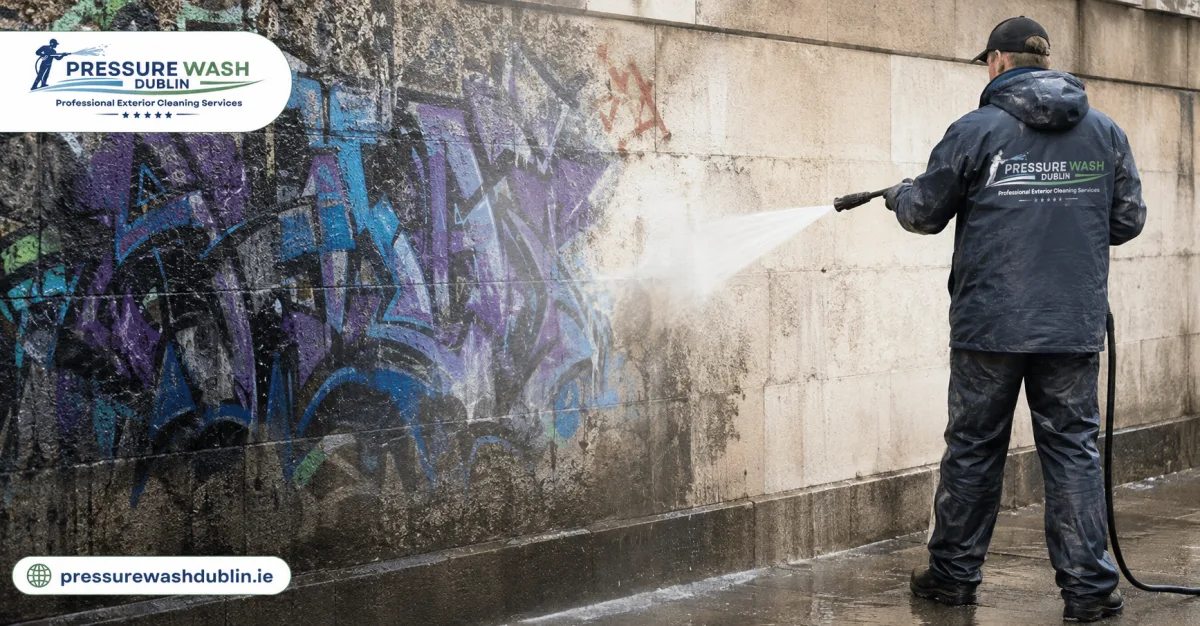
Discover safe graffiti removal methods for brick, stone and concrete in Dublin, plus practical advice on damage prevention, pricing and professional cleaning.
Graffiti can appear overnight, but removing it safely is rarely a simple matter of turning up the pressure. Paint, marker ink and aerosol coatings can penetrate porous surfaces, spread into surrounding areas or leave a ghost image if the wrong treatment is used. For property owners, landlords, facilities managers and local businesses, the goal is not only to remove the unwanted marking. It is to restore the appearance of the surface without creating a larger, more expensive repair problem.
This guide explains how professional Graffiti Removal works across Dublin and why brick, natural stone and concrete each require a considered approach. It also outlines the factors that influence graffiti removal cost and how a specialist cleaning team can protect the substrate during the process.
Why graffiti removal requires specialist care
A wall may look solid, but its surface can be surprisingly delicate. Brick has joints, edges and pores that can trap pigment. Natural stone varies in hardness and absorbency, while concrete may have a textured finish, protective coating or exposed aggregate. A method that works on a smooth painted metal panel could permanently mark a heritage brick façade or alter the colour of a limestone entrance.
That is why effective specialist cleaning begins with an assessment. The technician identifies the surface, the age and type of graffiti, nearby materials, drainage considerations and the safest treatment sequence. This approach is more reliable than applying a strong chemical or using high pressure without testing. It also helps establish a clear scope of work for residential and commercial clients.
Safe methods for brick graffiti removal
Brick is one of the most common surfaces affected by graffiti in Dublin, particularly on boundary walls, shopfronts, arches and older buildings. Because brick is porous, paint can soak below the surface. Excessive pressure may damage the brick face, erode mortar joints or drive contamination deeper into the wall.
A safer process usually combines a suitable graffiti-removal product with controlled agitation, low-to-moderate rinsing and careful recovery of run-off. A small, discreet test area should be completed first to confirm that the treatment lifts the marking without causing colour change or surface loss. On older or historic brickwork, non-abrasive techniques and gentle steam may be preferable to aggressive blasting.
The finish should be checked in changing light, because faint staining may become visible only after the wall dries. Where appropriate, a breathable protective coating can make future cleaning easier. Any sealer must be selected for the specific brick and applied only after the surface is clean, dry and suitable for protection.
Safe methods for natural stone
Natural stone needs particularly careful handling. Granite, sandstone, limestone and slate do not react in the same way to chemicals, heat or pressure. Some stones are highly absorbent, while others can be scratched, etched or discoloured by an unsuitable product. Historic masonry may also have a softer weathered surface that should not be treated like modern paving.
Professional Graffiti Removal on stone starts with identifying the material and carrying out a patch test. The technician can then select a compatible biodegradable lifting agent, controlled steam or another low-impact method. The objective is to break the bond between the marking and the stone, rather than abrade the face of the material. Rinsing should be controlled so that dirty water does not spread across adjacent stone or enter an inappropriate drain.
If the graffiti has been present for a long time, complete removal may require more than one treatment stage. A reputable provider should explain this possibility before work begins rather than promise an unrealistic instant result. For listed, historic or architecturally significant buildings, the owner should also confirm whether additional conservation guidance or permissions are required.
Safe methods for concrete graffiti removal
Concrete is durable, but it is not indestructible. Its texture and porosity can hold spray paint, while pressure washing can leave visible striping or expose aggregate if the operator works too aggressively. Concrete may also be part of a larger public-realm area where pedestrian safety, traffic management and run-off control matter as much as the appearance of the wall.
For concrete, the correct method depends on whether the marking is on a vertical wall, paving, a forecourt or a sealed decorative finish. A specialist may use a tested chemical treatment, steam or carefully controlled pressure, followed by thorough rinsing and inspection. The work should blend the cleaned section into its surroundings as much as possible. Cleaning only the exact outline of the graffiti can create a noticeable “clean patch,” especially on weathered concrete.
What affects graffiti removal cost in Dublin?
There is no universal price for graffiti removal. The final quotation depends on several practical factors, including the surface type, size and location of the marking, paint penetration, access, height, traffic controls, water and waste requirements, and whether protective sealing is requested. Multiple layers of old graffiti can take substantially longer than a fresh tag on a smooth surface.
Cost factorWhy it matters Surface material Porous brick and sensitive stone may need slower, more precise treatment.Area and number of markingsLarger or repeated areas require more labour, product and rinsing.Access and heightLifts, scaffolding or traffic management can affect mobilisation costs.Age and coating typeOlder, layered or deeply absorbed paint may need several stages.Protection and follow-upAn anti-graffiti coating can add upfront cost but simplify future cleaning.
Cost factor: Surface material.
Why it matters: Porous brick and sensitive stone may need slower, more precise treatment.
Cost factor: Area and number of markings.
Why it matters: Larger or repeated areas require more labour, product and rinsing.
Cost factor: Access and height.
Why it matters: Lifts, scaffolding or traffic management can affect mobilisation costs.
Cost factor: Age and coating type.
Why it matters: Older, layered or deeply absorbed paint may need several stages.
Cost factor: Protection and follow-up.
Why it matters: An anti-graffiti coating can add upfront cost but simplify future cleaning.
A professional quote should describe the proposed method, limitations, preparation, clean-up and any optional protection. Comparing only the lowest headline price can be misleading if the service uses an unsuitable method or excludes access and waste handling. For an accurate graffiti removal cost, send clear photographs and provide the address, surface type and approximate dimensions, followed by an on-site assessment where needed.
Why choose specialist cleaning services?
Specialist cleaning services are designed for problems that standard washing cannot safely or consistently resolve. In Dublin, an exterior specialist cleaning Dublin provider may also handle chewing gum, oil, ingrained staining and other difficult contamination. Combining targeted treatment with wider power washing or soft washing can create a more even result across a complete façade, entrance, footpath or commercial site.
When comparing specialist cleaning companies, look for evidence of surface testing, suitable equipment, trained operators, insurance, transparent quotations and a clear plan for protecting surrounding areas. A company that calls itself one of the cleaning specialists Cork businesses may not be the best fit for a Dublin project; local access, response times and experience with Dublin’s varied urban surfaces are relevant considerations. The key is to choose cleaning specialists who explain the process and its risks clearly.
How to prevent repeat graffiti
Removal is only the first step. Prompt reporting can reduce the time paint has to penetrate, while good lighting, secure gates, cameras and community reporting may discourage repeat incidents. On suitable surfaces, a professionally selected sacrificial or permanent anti-graffiti coating can make future marks easier to remove. The coating should not be applied blindly: breathability, appearance, maintenance needs and compatibility with the substrate all matter.
For homes, retail units, hospitality venues and public-facing premises, a planned inspection schedule can also help identify fresh marking quickly. Keeping a record of the surface condition and previous treatments makes future specialist cleaning more consistent.
Get professional graffiti removal advice
Safe graffiti removal is a balance of cleaning power, surface knowledge and careful control. Brick, stone and concrete each need a method suited to their structure, finish and surroundings. By requesting a proper assessment and a transparent quotation, you can reduce the risk of damage and understand the likely graffiti removal cost before work starts.
If you need specialist cleaning Dublin support for a wall, entrance, forecourt or other exterior surface, contact Pressure Wash Dublin to discuss the marking, access and substrate. A tailored plan can help restore the property while protecting the material underneath.